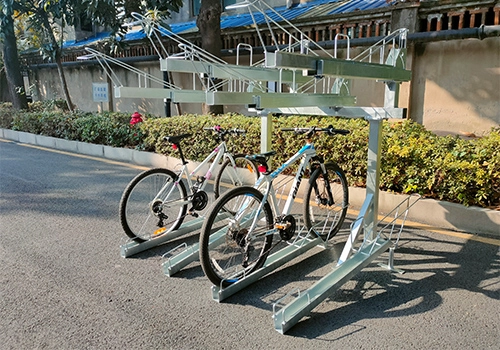
Cities, schools and property managers worldwide are investing in cycling infrastructure to cut urban carbon emissions. Cycling is celebrated as a zero-emission transport choice: every trip shifted from cars to bikes lowers greenhouse gas output, reduces traffic congestion and improves air quality. Yet many procurement teams overlook a key part of sustainability: the carbon footprint of bike parking hardware itself.
When project buyers focus only on upfront cost, thin-gauge cheap bike racks often win bids. These low-cost options seem like a green choice because they support cycling. However, their short service life creates repeated carbon emissions from manufacturing, shipping, demolition and waste disposal. In lifecycle carbon accounting, durable, well-built bicycle parking racks deliver far better climate outcomes. As a bicycle parking rack manufacturer, Suzhou Pioneer Vehicle explores how material quality, service life and design shape the carbon footprint of cycling infrastructure, and why long-lasting racks are essential for truly sustainable urban mobility.
Cycling Infrastructure: Hidden Embodied Carbon
Most sustainability evaluations of cycling projects only calculate operational carbon savings — the CO₂ saved when residents ride bicycles instead of driving. Embodied carbon, emissions created during raw material extraction, manufacturing, transport and installation, is rarely considered. For bike racks, steel production accounts for the largest share of embodied carbon. Every kilogram of steel generates emissions from ore processing, melting, forming and surface treatment. Shipping heavy metal products across continents adds extra carbon cost.
The critical flaw of low-quality bike racks is that their embodied carbon is consumed over just a few years. Budget racks made from thin steel and poor welds may bend, rust or fail within 3–5 years. Once broken, property owners must remove old racks, dispose of waste, order replacements, and repeat the full manufacturing and shipping cycle. Each replacement adds more carbon. Over 20 years, a site using cheap racks may need three or four complete replacements. Each refresh multiplies the total embodied carbon of that bike parking station.
A high-quality, hot-dip galvanized steel rack from a trusted manufacturer can stay structurally sound for 20 to 30 years with minimal maintenance. All embodied carbon is expended once, not repeatedly. This is the core sustainability principle: reduce replacement frequency, and you cut lifecycle carbon emissions. For green building certifications and municipal carbon reduction plans, lifecycle analysis should replace the old habit of judging infrastructure solely by initial price.
Why Cheap Bike Racks Fail Fast and Generate Carbon Waste
Low-cost bike rack manufacturers cut corners to hit low price points. They use thinner steel tubing, skip full hot-dip galvanization, use basic paint coatings, and rush welding procedures. These tactics reduce factory costs, yet environmental harm accumulates quickly.
Thin steel deforms under regular use. Heavy e-bikes, frequent leaning, vandalism and winter snow loads bend tubing and warp frames. Once deformed, racks cannot hold bikes securely and create safety hazards. Poor welds crack under repeated stress; rust quickly attacks unprotected metal. Ordinary paint chips easily, exposing raw steel to moisture and road salt. Corrosion spreads fast and weakens the whole structure.
When racks fail early, carbon impacts happen across multiple stages. Maintenance crews travel to remove damaged racks, burning fuel for vehicles and tools. Broken metal often ends up in landfill instead of recycling, especially when rust and mixed coatings make scrap recovery difficult. New racks are manufactured, packed and shipped, triggering another round of factory emissions and transport carbon. The total carbon footprint for the site can be two or three times higher than if durable racks were installed from the beginning.
Many project owners assume"any bike rack is green"because it encourages cycling. This only holds true if the infrastructure remains usable long-term. Broken, rusted or unsafe racks discourage cyclists. Poor quality parking undermines the original goal of cutting transport emissions. In the worst cases, low-cost racks waste both capital and carbon.
Durable Racks: Lower Lifecycle Carbon and Better Circularity
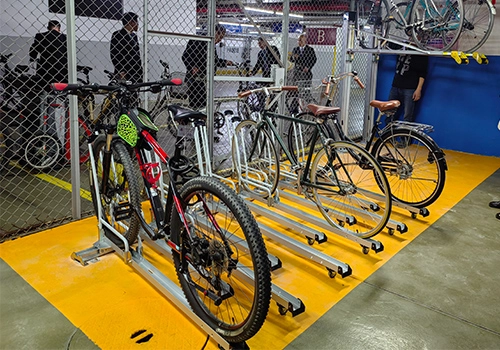
Premium bike racks are engineered for long service life, which directly reduces carbon impact. Key design features include thicker steel profiles, consistent quality welds and robust corrosion protection such as hot-dip galvanization plus powder coating. These features resist deformation, rust and mechanical stress, extending usable life for decades.
Steel is one of the world’s most recyclable structural materials. At the end of a high-quality rack’s life, the entire metal frame can be recycled without losing material performance. This circular benefit only works when the rack reaches its natural end-of-life, rather than being scrapped prematurely due to avoidable damage. Cheap racks degrade into heavily corroded scrap that is harder to recycle, losing circular advantages.
Durable bike racks also cut maintenance carbon. Repainting, rust treatment, part replacement and site inspections consume labour, chemicals and fuel. High-performance galvanized and powder-coated racks from Suzhou Pioneer Vehicle need almost no routine maintenance. Less maintenance means fewer site visits, fewer chemicals and lower ongoing carbon output over decades of operation.
For municipal and commercial buyers, lifecycle carbon assessment aligns closely with total cost of ownership. Higher upfront investment in durable racks reduces spending on removal, replacement, maintenance and waste handling. Environmental benefits and financial savings go hand in hand. This is increasingly important for public projects requiring ESG reporting, carbon accounting and sustainable procurement rules.
Material and Craftsmanship: Where Carbon Efficiency Is Built
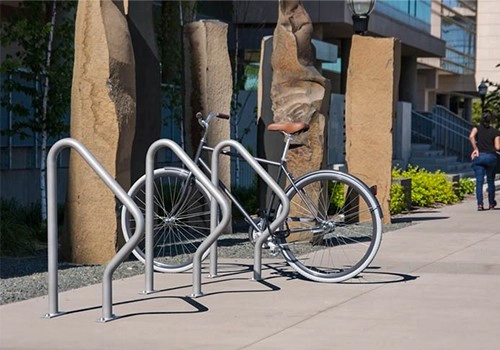
Material thickness and weld quality, which determine mechanical strength, are also central to carbon efficiency. Under-engineered thin steel uses less metal at the factory, which appears as a carbon saving on paper. But this saving is an illusion if the rack needs multiple replacements. A slightly heavier, properly sized steel rack has marginally higher embodied carbon during production, yet spreads that carbon across 25+ years of service.
Consistent, high-quality welds prevent early structural failure. Weak weld points are the most common failure spot on budget racks. Cracked welds let water seep in, speeding up rust and structural breakdown. Suzhou Pioneer Vehicle’s manufacturing process includes full weld inspection, material verification and strict quality control before surface treatment. Every bike rack is designed to withstand outdoor weather, heavy daily use and e-bike loads.
Corrosion protection is another carbon lever. Hot-dip galvanization creates a bonded zinc layer that protects steel even when scratched. Simple spray paint cannot match this performance. While galvanization adds some embodied carbon during production, it prevents early rust failure and removes repeated repainting cycles. Over the asset’s lifespan, the net carbon balance is strongly positive.
We also reduce our production footprint by sourcing recycled steel where possible, optimizing factory workflows to cut energy waste, and refining packaging to lower shipping weight and material waste. As a bike rack manufacturer, sustainability is built into our engineering and quality standards, not added as an afterthought.
Real-World Impact: Infrastructure That Delivers Climate Benefits
Take a campus project installing 50 bike racks. Low-cost thin-wall units may need full replacement every four years. Over 24 years, the site purchases six batches. Durable racks from Suzhou Pioneer Vehicle serve the same site for the full 24 years with one installation. The durable option eliminates five full cycles of manufacturing, ocean transport, site installation and waste removal. The carbon difference is substantial.
Beyond carbon calculations, reliable bike parking boosts cycling adoption. Safe, stable, rust-free racks make people confident to secure their bikes. When cyclists trust the infrastructure, more people choose to ride, increasing transport carbon reductions. Sustainable cycling infrastructure works two ways: it limits its own embodied carbon through long service life, and unlocks carbon savings by enabling mode shift.
Planners focused on climate action should evaluate bike parking using total lifecycle carbon, not just per-unit manufacturing emissions. Project specifications should include minimum steel thickness, weld standards, corrosion resistance and expected service life. These clauses ensure sustainability targets are not undermined by short-life infrastructure.
Choose Long-Lasting Bike Racks from Suzhou Pioneer Vehicle
Suzhou Pioneer Vehicle is a professional manufacturer of bicycle parking systems for municipal, commercial, educational and public infrastructure projects worldwide. Our bike racks are engineered for extended outdoor service life, built with certified steel, precision welds and premium anti-corrosion finishes. We supply standard U-racks, two-tier bike parking systems, cycle shelters and custom bike storage solutions tailored to project specifications.
We support sustainable procurement requirements, offering product documentation for lifecycle evaluation, material traceability and ESG reporting. Whether your project targets LEED credits, municipal carbon reduction goals or corporate sustainability targets, our durable bike parking racks minimize embodied carbon waste and support your long-term climate strategy. Contact our team today to discuss your bike parking project requirements.