













ChinaBikerack
Bike Parking Solution Supplier
ChinaBikerack
Bike Parking Solution Supplier

Specifications
Model Number : PV-SC-001
Type: Bike parking and storage
Color:Yellow,Black,Green,Red,or Customized.
Style : both indoors and outside
Material : carbon steel
Loading: According to customer need
Size :195*23.2*75cm,200.55*23.2*75cm,or Customized.
Finish: hot-galvanized

Specifications
Model Number : PV-0081-01
Type: Bike parking and storage
Color:silver
Style : both indoors and outside
Material : carbon steel
Loading: According to customer need
Size :Height 1463mm, Depth 1114mm
Finish: hot-galvanized

Model Number : PV-0081-01
Type: Bike parking and storage
Color:Black
Style : both indoors and outside
Material : carbon steel
Loading: 2-10 bikes (According to customer need)
Size :Height 1463mm, Depth 1114mm
Finish: hot-galvanized

Model No.: PV-H1
Size: w605*D400*H330mm
Specification: Round tube:¢16*1.2mm
Finish: Power coated
Net Weight: 1.6 kgs
Packing size:6pcs/ctn
MOQ: 100pcs

Model Number : PV-0024-01
Material : carbon steel/stainless steel
Loading: according customer space size,we can design according the size
Size : W1977*D1130(depend on your parking space)*H2500mm
Finish: Powder coated ,hot-galvanized/electric polish
Packing size :2000*2000*2500mm(40 parking space )
Powder coated ,hot-galvanized/electric polish

Product number:PV-0046-01
Material:carbon steel
Specification:10.2*59*28CM or Customized.
MOQ:100PCS
Port:Shanghai
Trademark:PV

Model Number : PV-0081-01
Type: Outdoor Bike Parking Rack
Style : both indoors and outside
Material : carbon steel
Loading: 2-10 bikes (According to customer need)
Size :170.5*116*148CM
Finish: hot-galvanized

Model Number : PV-0055-01
Type: compact flat pack /slot
Color:black / silver /yellow/optional
Style :Outdoor/indoor
Material : carbon steel/ stainless steel
Capacity : park 6 bikes
Size : L1400*W1054*H840mm
Net weight :38KG
Finish: powder coating / hot galvanized /elctropolishing
Packing size :1490*860*160mm 1pcs/ctn

Product Name: Multi-Capacity Horizontal Two Tier Bike Parking Rack
Material: Carbon Steel
Finish: Powder coated
Post: 80mm * 80mm thickness: 3mm
Steel plate: thickness: 2mm
Dimension: 1325*1890*1830mm
Weight: 370 kg/set

Model: PV-0067-01
Material: stainless steel 304
Pipe: 50 mm* 2.5 mm
Size: 900*700 mm(L*W)
Surface treatment: polishing
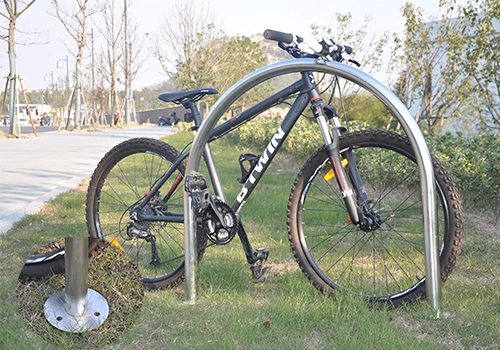
The city speaks through its street furniture. Every bench, every lamppost, every bollard tells a story about what a community values. And increasingly, the humble bike rack is stepping out of the shadows to become one of the most visible—and most vulnerable—narrators of that story.We're not talking about the sad, lonely wheel-benders bolted to sidewalks in the 1990s. We're talking about streetscape bike racks—objects that function with surgical precision while simultaneously sculpting the visual rhythm of public space.
Most bike racks are architectural apologies. They're afterthoughts. The city planner draws the building, carves out the road widths, designs the pedestrian zones—and then, with whatever budget is left, stabs a few metal loops into the concrete.
And it shows. A poorly designed rack doesn't just fail at security—it fails at dignity. It tells cyclists: You are tolerated, not welcomed. It signals to passersby: This space isn't really for people on two wheels.
But when you get it right? The bike rack becomes a silent ambassador. It whispers: We thought about this. We designed for you. This city cares.
Not all racks are created equal. Here's what separates a functional urban object from street clutter.
If a rack can't support a bicycle frame at two separate points (typically the top tube and the wheel), it's not a rack—it's a decoration. Streetscape design demands structural integrity that survives the 3:00 PM school rush, the midnight commuter, and the occasional delivery truck backing into it.
Cast iron speaks of permanence. Stainless steel bike racks whispers modernity. Powder-coated aluminum shouts playfulness—but only if the coating can survive 80 winters of salt spray and UV bombardment. The best racks wear their materials unapologetically.
A truly streetscape-conscious rack system doesn't dictate a single form—it adapts. Five racks for a narrow alley. Twenty racks in a sweeping arc for a transit hub. The system should be a kit of parts, not a fixed sculpture.
Most designers obsess over width and height. They forget depth. A rack that forces handlebars into the pedestrian walkway has failed before the first bike is locked. Streetscape design is three-dimensional choreography.
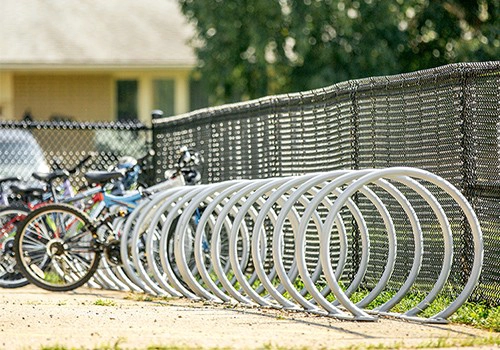
Let's address the elephant in the plaza: Beauty is not the goal. Fitness is.
We've seen "artistic" bike racks that look stunning in gallery photos but become unusable in real-world conditions. Bikes slide off curved surfaces. Unusual angles make U-locks impossible to thread. The rack becomes a monument to the designer's ego, not a tool for the cyclist.
The most beautiful bike rack is the one you don't notice—until you need it. Then, it becomes the most beautiful thing on the street.
That said, "fitness" doesn't mean boring. The finest streetscape racks strike an almost impossible balance: repetition with variation, consistency with surprise.
The Transit Hub: Volume is everything. Racks need to pack tightly, allow rapid locking/unlocking during rush hour, and withstand relentless churn. The functional win is linear density—getting 30 bikes into a 40-foot span without creating a maze of twisted handlebars.
The Restaurant Row: Curb appeal matters. These racks need to complement awnings, outdoor seating, and heritage facades. The aesthetic win is material sympathy—finishes that patina gracefully alongside historic brick.
The Campus Quad: Flexibility rules. Students lock unpredictably. The design win is open accessibility—racks that don't create bottlenecks, that accommodate cargo bikes and electric fat-tire models without prejudice.
The Corporate Plaza: Statement-making. These racks aren't just parking—they're brand signals. The aesthetic win here is quiet confidence—no logos, no slogans, just immaculate execution.
Here's something the glossy magazines won't tell you: The most secure rack is often the ugliest.
Heavy gauge steel. Minimal surface area for angle grinders. Locking points that force thieves to work in awkward positions. These features don't photograph well. But they matter enormously to the person locking a $5,000 e-bike outside their office for nine hours.
Streetscape design resolves this paradox through visual weight—making the rack look so solid, so clearly part of the permanent infrastructure that thieves instinctively look elsewhere.
Every city block has its own DNA. The width of the sidewalk. The rhythm of the streetlights. The vocabulary of the surrounding architecture. A rack that succeeds in one location can feel profoundly wrong just two blocks away.
This is why configurability is the foundation, not a premium add-on. The best systems offer variable heights, multiple mounting options, finish palettes from industrial bare steel to playful RAL colors, and modular expansions that grow with demand.
One system. Infinite expressions.
A well-designed bike rack system costs more upfront. But consider this arithmetic:
A single car parking space in a downtown garage costs $20,000–$50,000 to construct.
That same footprint accommodates 10–12 bicycles on high-quality racks, requires negligible maintenance, encourages foot traffic to adjacent businesses, and signals progressive values to a workforce that prioritizes sustainable commuting.
The ROI isn't just financial—it's cultural. Cities that invest in quality cycling infrastructure attract younger, more educated residents. The bike rack is the cheapest urban renewal project you'll ever fund.
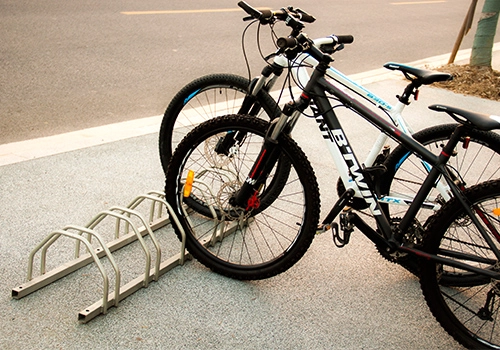
We don't make "bike racks." We make streetscape instruments—objects that perform at the intersection of engineering, urban planning, and visual poetry.
Our portfolio spans:
Heritage Series: Cast-iron classics that honor historical districts
Flow Series: Wave-form racks that create visual movement in plazas
Grid Series: High-density modular systems for transit and institutional use
Custom Studio: Bespoke designs for signature projects, with our engineers working alongside architects from concept through installation
Every rack in our catalog shares three non-negotiable principles:
Structural over-engineering—our racks survive what our competitors' can't
Finish longevity—we spec coatings that outlast the warranty by decades
Installation intelligence—we design for the contractor, not just the end-user
We've supplied racks to 47 states and 14 countries. We've worked with municipalities that demanded LEED compliance, with architects who demanded signature aesthetics, with facility managers who demanded zero-maintenance reliability.
We've never said "no" to a challenge. We've only said "tell us more."
The next generation of streetscape racks will incorporate integrated locking with app-based access, solar-powered lighting for nighttime visibility, occupancy sensors feeding real-time data to city dashboards, and modular add-ons like pumps and repair stands.But our conviction remains: Technology is a layer, not a replacement. The physical object must still work beautifully when the power goes out, when the app crashes, when the network fails. The fundamental geometry—the two-point lock, the stable footprint, the intuitive access—remains the foundation.
Smart features are seasoning. The rack itself is the meal.
Ready to rethink what a bike rack can be? Let's talk about your next project—whether it's a single sculpture for a plaza or a city-wide standard for the next decade. We design. We engineer. We deliver. And we never forget that every rack we make becomes part of someone's daily life.